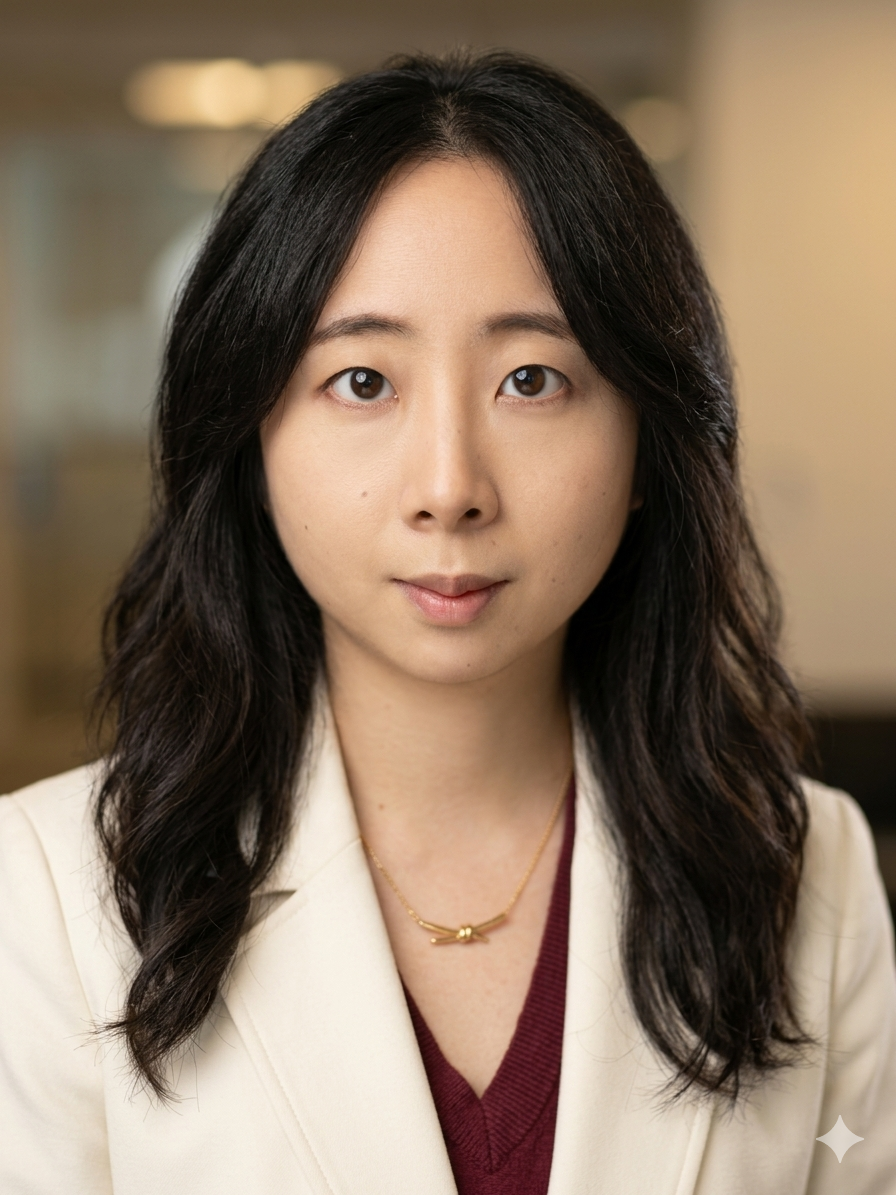
SDE II · Amazon · Seattle, WA
Full-stack engineer with 7+ years building production AI systems and scalable platforms. I architect multi-agent AI infrastructure, design real-time data pipelines, and bridge research with engineering — from brain imaging labs to enterprise AI at Amazon.
Hey, I'm Coco — a software engineer who straddles the line between production engineering and applied research. I grew up in Wenzhou, China, moved to Philadelphia at 16, and graduated from UPenn with a double major in Computer Science and Cognitive Science, Magna Cum Laude.
At Amazon, I build enterprise AI infrastructure that handles massive scale — multi-agent systems powered by LLMs, real-time data pipelines, and AI safety systems protecting data integrity for thousands of downstream users.
Before Amazon, I co-founded a behavioral-assessment tech startup (acquired in 2022), and spent four years running neuroimaging research at UPenn, Princeton, and UPenn Medicine — publishing 8 papers along the way.
Multi-agent AI with LLMs, RAG/GraphRAG, MCP — processing 40M+ documents daily at 99.99% uptime.
React to Lambda to OpenSearch — end-to-end ownership across the full stack at enterprise scale.
8 peer-reviewed papers, 207 citations in computational neuroscience. I translate science into production systems.
Built ForeverBrainTech from 0 to 100k+ users and 10+ engineers before acquisition in 2022.
Deepening expertise in security architecture, threat detection, and risk management to better protect systems in today's AI-powered world.
Double major spanning AI, algorithms, data systems, perception, decision-making, and neuroeconomics. Four years of parallel research in neuroimaging labs.
Full-stack platform (React + Lambda/EC2 + OpenSearch) aggregating data from 20+ sources, serving 10k+ users with <1s p95 latency and 99.99% uptime. Exposes 600k+ daily requests via secure REST APIs to 100+ downstream teams.
Designed a multi-agent AI system using Claude (Bedrock) with MCP for coordination and RAG/GraphRAG for knowledge retrieval. Reduced incident triage time from 3 hours to 3 minutes — a 99% efficiency gain during high-stakes operational events.
Designed and implemented production AI safety infrastructure: prompt injection defense, PII detection/scrubbing (>99.9% accuracy), hallucination monitoring, and automated security controls — protecting data for 10k+ users across 100+ downstream teams.
Co-founded and architected a full-stack behavioral assessment platform scaling to 100k+ users across 5 provinces. Built an end-to-end ML pipeline for automated behavioral reporting. Scaled team from 0 to 10+ engineers before acquisition.
Built a full-stack web platform serving 100k+ research participants during COVID-19. Enabled concurrent multi-site studies with real-time data aggregation when physical labs closed worldwide.
Contributed to BrainIAK's open-source RT-Cloud: redesigned cloud architecture for real-time fMRI neurofeedback experiments, integrating OpenNeuro into processing pipelines. Published in NeuroImage, 2022.
Four years of cognitive neuroscience research at UPenn, Princeton, and the University of Rochester — studying decision-making, sleep, and brain imaging. 8 published papers · 207 citations.
Mao, T., Dinges, D., Deng, Y., Zhao, K., et al. Impaired vigilant attention partly accounts for inhibition control deficits after total sleep deprivation and partial sleep restriction.
Arya, N., Vaish, A., Zhao, K., & Rao, H. Neural mechanisms underlying breast cancer related fatigue: a systematic review of neuroimaging studies.
Giorgi, S., Zhao, K., Feng, A.H., & Martin, L.J. Author as character and narrator: Deconstructing personal narratives from the r/amitheasshole Reddit community. Proceedings of the International AAAI Conference on Web and Social Media, 17.
Wallace, G., Polcyn, S., Brooks, P.P., Mennen, A.C., Zhao, K., et al. RT-Cloud: A cloud-based software framework to simplify and standardize real-time fMRI.
Happy to talk about AI systems, engineering challenges, research, or opportunities.